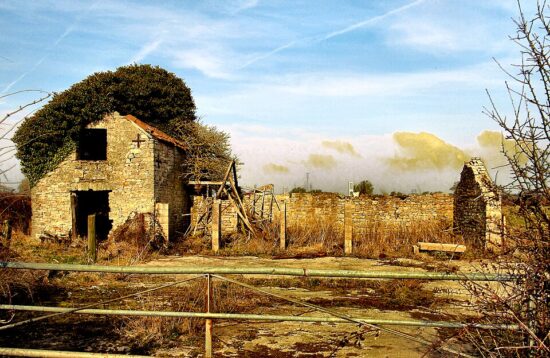
Henry’s Farm
People who saw Henry Jenkins’s farm would murmur to themselves. It was set in one of the most beautiful valleys in the area, with rolling fields that lolled into the distance and disappeared over the gentle inclines of the hills and mountains.
Although the farm was quite productive since Henry had a good herd of prize cattle and a flock of hardy sheep, there were one or two things that stood out as being rather bizarre.The farmhouse was only just habitable. The rumour was that Henry had had a row with his family and when his father died Henry had been passed over and all the property had been bequeathed to Edward Jenkins, his younger brother with whom he didn’t get on. Henry was allowed to stay in it until he died. But knowing that Edward would inherit the house and land, he had deliberately spent nothing on it and let it go to wrack and ruin. The roof leaked, the window frames were rotten and the wall was on the verge of toppling down.
The arable fields that once were vast swathes of corn and barley had been left to grow into brambles and briars. There was plenty of opportunity for the land to be productive, but this was yet another way for Henry to get back at Edward.
Henry didn’t mind living in the place. He earned more than enough to live on from the animals and he couldn’t be bothered to put himself out. A few buyers came and tried to offer him a large amount for the property, given its potential. But Henry wasn’t interested and of course never mentioned it to Edward.
The sting in the tail came one November’s evening. News arrived that his younger brother had died. And when the will was read, Edward had left the farmhouse and all the property to Henry.