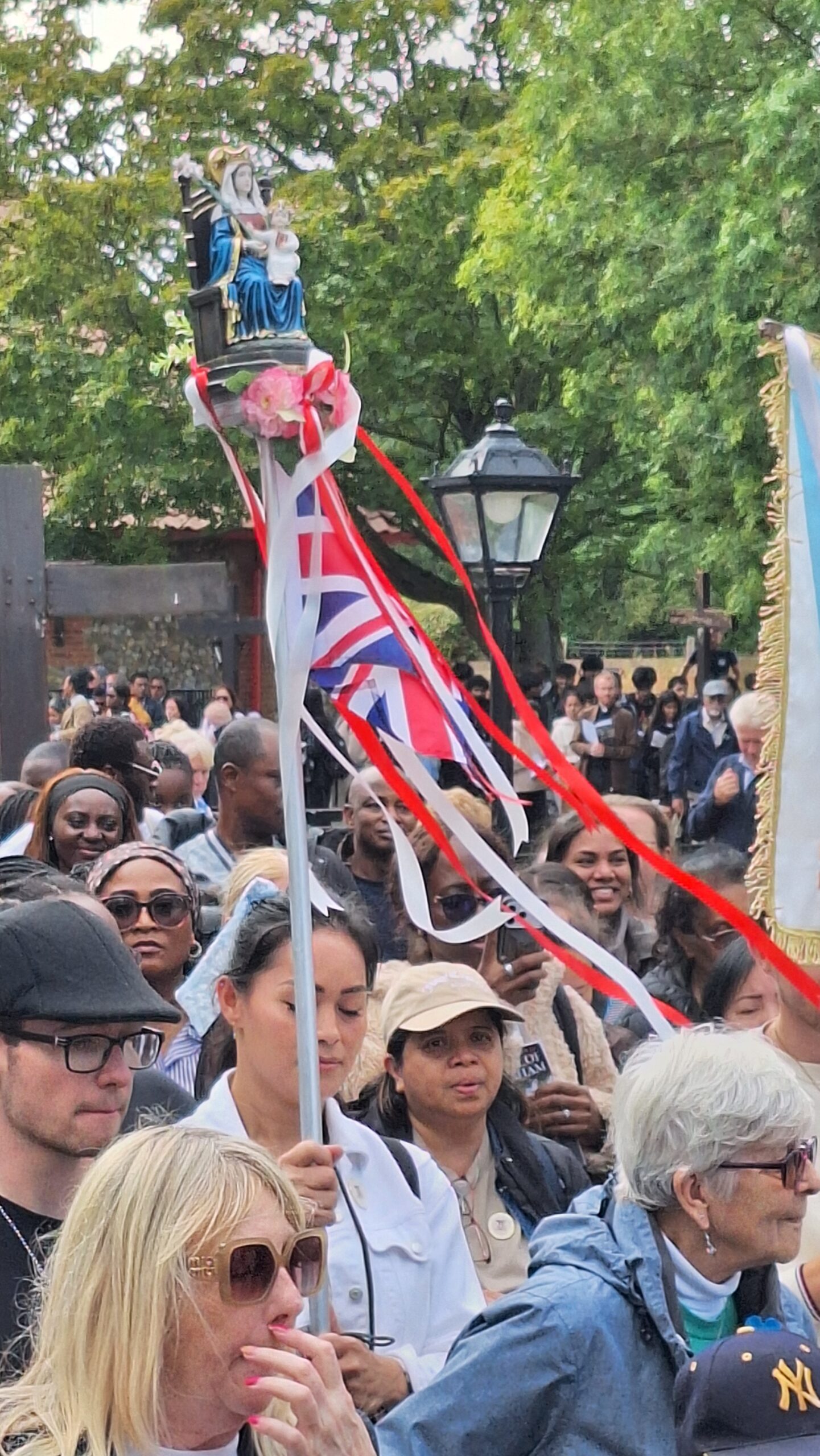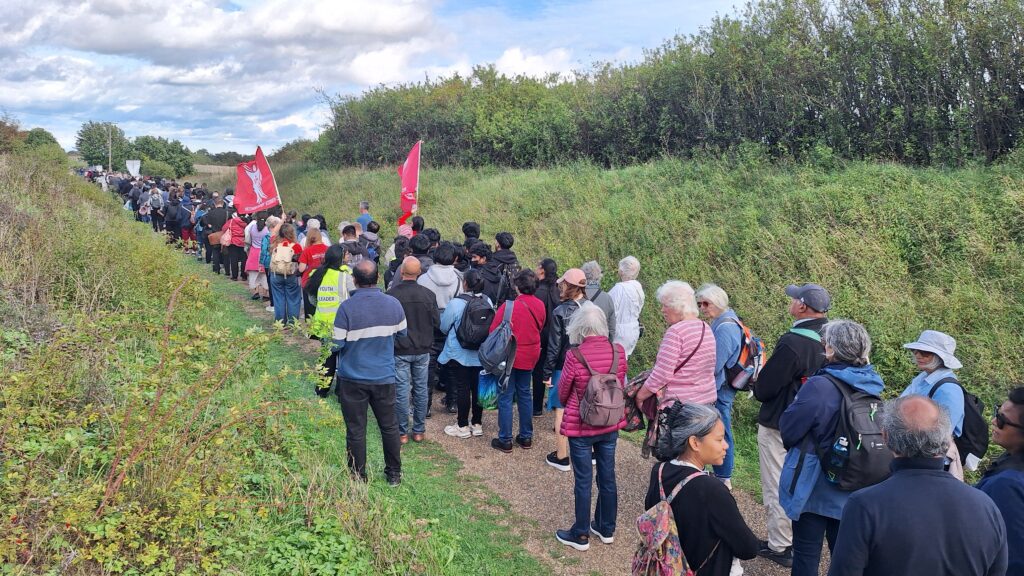
This year’s parish pilgrimage to Walsingham was very special. It marked the Tenth Westminster Diocesan Pilgrimage to Walsingham, led by His Grace Richard Moth, the new Archbishop of Westminster. He presided over the celebrations and, together with concelebrants, led the pilgrims along the Holy Mile to the Priory Grounds, where the magnificent remains of the original shrine stand.
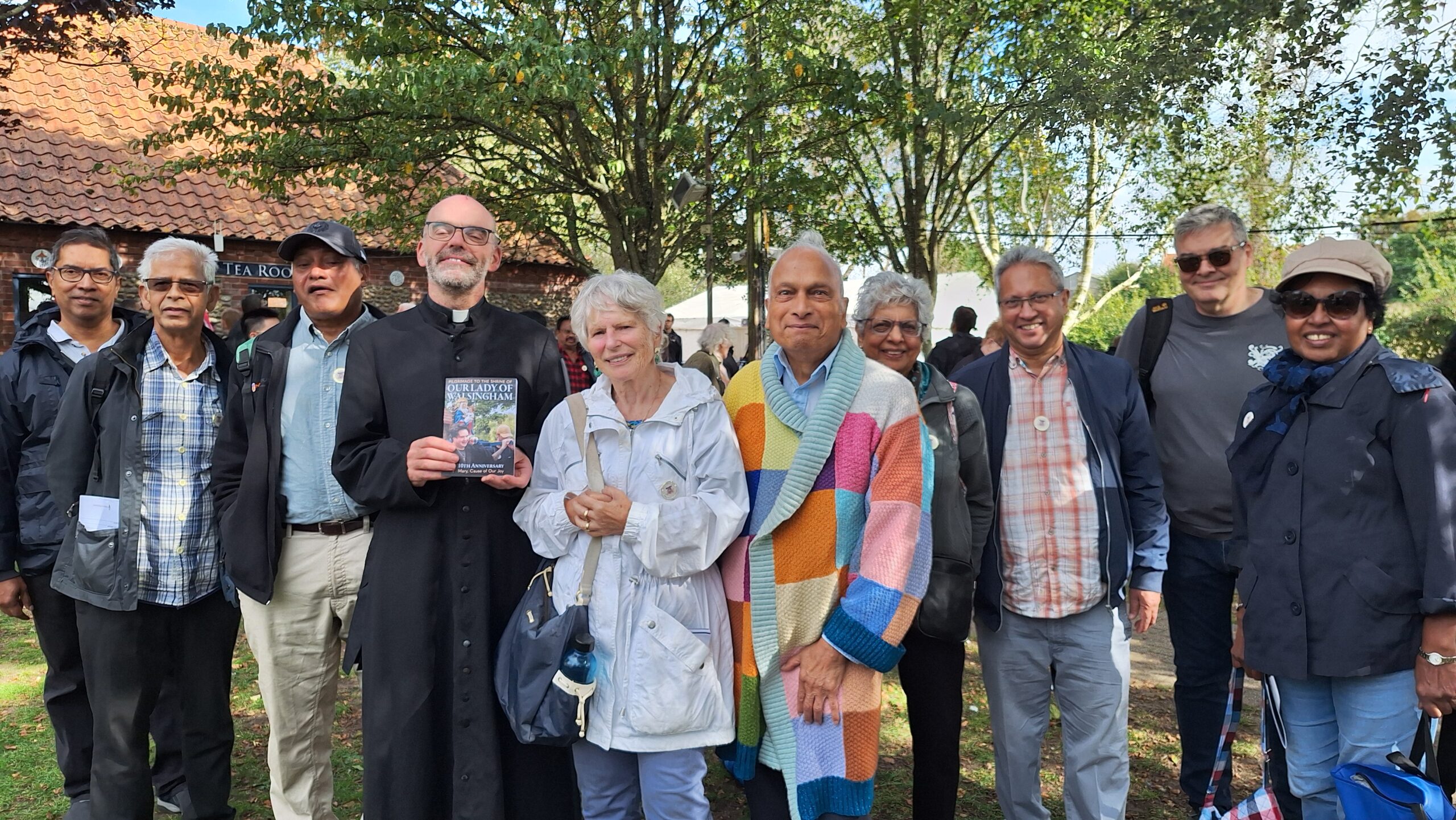
As the morning sun shone upon us, 49 parishioners from St John Fisher joined pilgrims from around thirty other London parishes across the Westminster Diocese, bringing the total to approximately 800. Together, we travelled to the northern reaches of Norfolk, praying along the way and learning about the shrine’s history from Fr Francis.
We had different reasons and expectations for the pilgrimage. ‘I think that it’s very important for us to build and strengthen our parish community, and this pilgrimage is an excellent opportunity to do this. I hope to have a spiritual experience of the history of faith and devotion to Our Lady, in the context of our nation’s history.” Stuart
Some of us made the pilgrimage to Walsingham before, even a few times. “It is my fifth pilgrimage, and probably it will be the last one because my ability to walk long distances has severely diminished. I was here for the first time seventy years ago. However, since this is an anniversary pilgrimage, I felt it was important to be here. I felt that once again I wanted to be a part of the event that has a centuries-long Christian history.” Neville
“My auntie convinced me that I should take part in the pilgrimage, but I wasn’t sure what to expect. After Fr Francis’ introduction, I realised we were going to pay homage to Our Lady and gain a deeper understanding of her role in the Church in this very special place that drew pilgrims for centuries.” Tessa, one of the youngest members of our group.
“I came on the pilgrimage with my Mum to honour my aunt, who had a special devotion to Our Lady. I hoped to experience the warmth and energy of a Christian community, as well as the beautiful and peaceful surroundings of the pilgrimage walk, an environment conducive to reflection, prayer and contemplation.” Claudine
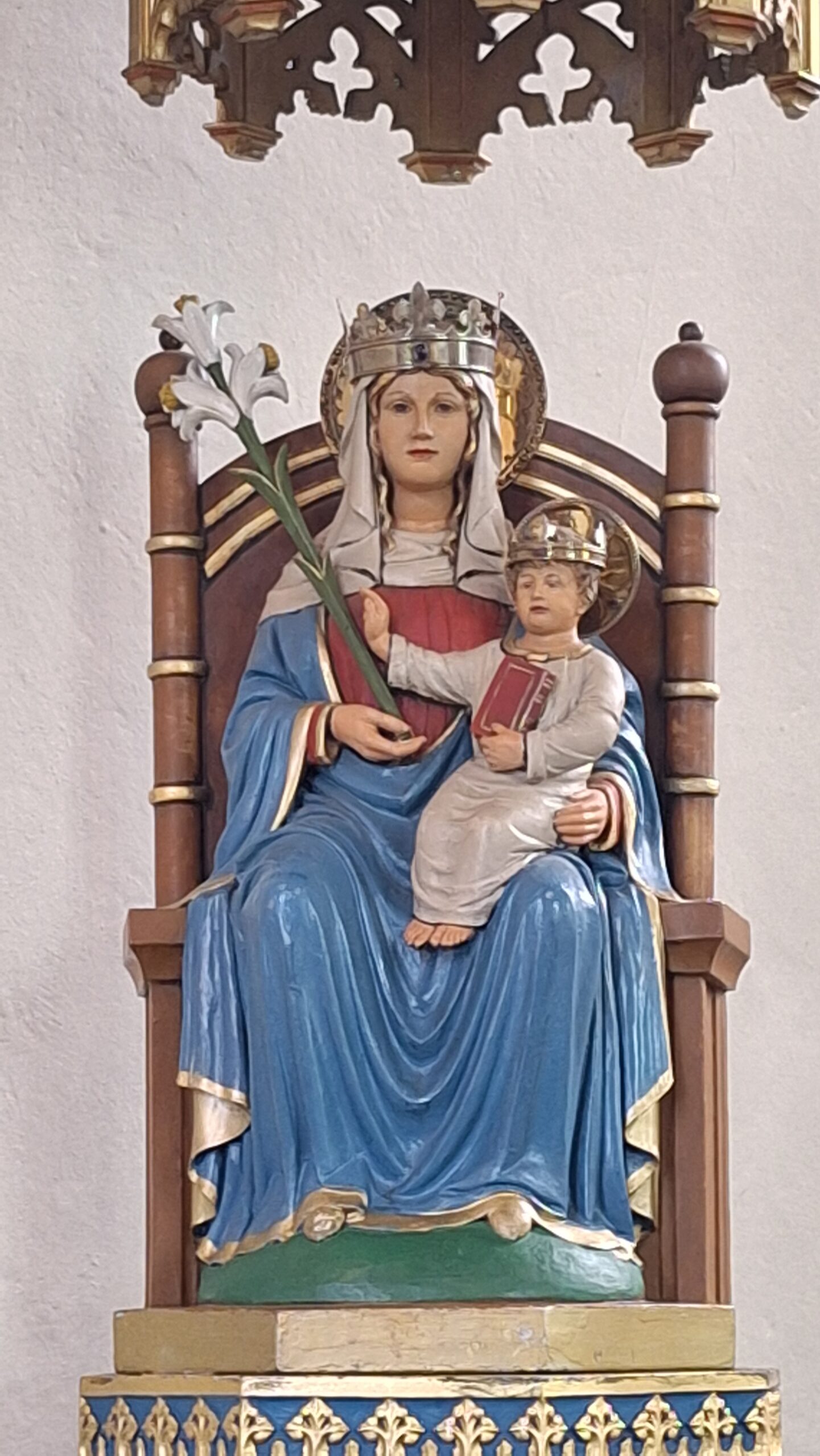
The history of Walsingham goes back to the eleventh century and the village of Little Walsingham. In 1061, a pious noblewoman, Richeldis de Faverches, devoted to Our Lady, prayed for guidance on how she might honour her. In response to her prayers, the Virgin Mary appeared to Richeldis three times in dreams, showing her Nazareth and the House of the Annunciation, where the Angel Gabriel had greeted Mary. She instructed Richeldis to build a replica in Walsingham as a perpetual memorial to the Annunciation. The Holy House was first built in wood and later reconstructed in stone.
Around 1130, a community of Augustinian Canons took charge of the foundation and built a priory beside the Holy House. Under their care, Walsingham developed into one of the most important shrines in medieval Europe.
From Henry III in 1226 to Henry VIII in 1511, almost every English king made a pilgrimage to Walsingham. The shrine ranked among the great pilgrimage destinations of Christendom, alongside Rome, Jerusalem and Santiago de Compostela in Spain.
However, in the wake of the Reformation, Walsingham’s centuries-old tradition came to an abrupt end. In 1538, the King’s commissioners seized the Priory and its property under the Acts of Suppression, part of the Dissolution of the Monasteries. The statue of Our Lady of Walsingham was taken to London and destroyed. Nothing remains today of the original shrine, although its site is marked on the lawn of the Abbey grounds in Little Walsingham.
After the shrine’s destruction, Walsingham ceased to be a place of pilgrimage. It was not until 1896 that Charlotte Pearson Boyd purchased the Slipper Chapel, just outside the village, and restored it for Catholic use. The chapel was one of several wayside chapels where medieval pilgrims could stop to pray and attend Mass before walking the final mile to the Holy House. Its name may derive from the tradition of pilgrims removing their shoes and walking the last mile barefoot.
Although the Slipper Chapel survived the Reformation, it fell into neglect and was used successively as a poorhouse, a forge, and even a cow byre. Its restoration marked the beginning of the revival of Catholic pilgrimage to Walsingham.
A Shrine of Our Lady of Walsingham was established at the Church of the Annunciation in King’s Lynn, and in August 1897 the first pilgrimage to Walsingham since the Reformation took place. In 1922, the new vicar, the Reverend Alfred Hope Patten, established a shrine in the parish church of St Mary.
In 1934, Cardinal Bourne led a pilgrimage of 10,000 people and declared the Slipper Chapel to be the National Catholic Shrine of Our Lady of Walsingham. Since the 1950s, the shrine has continued to develop as a place of pilgrimage and worship, welcoming more than 250,000 visitors each year.
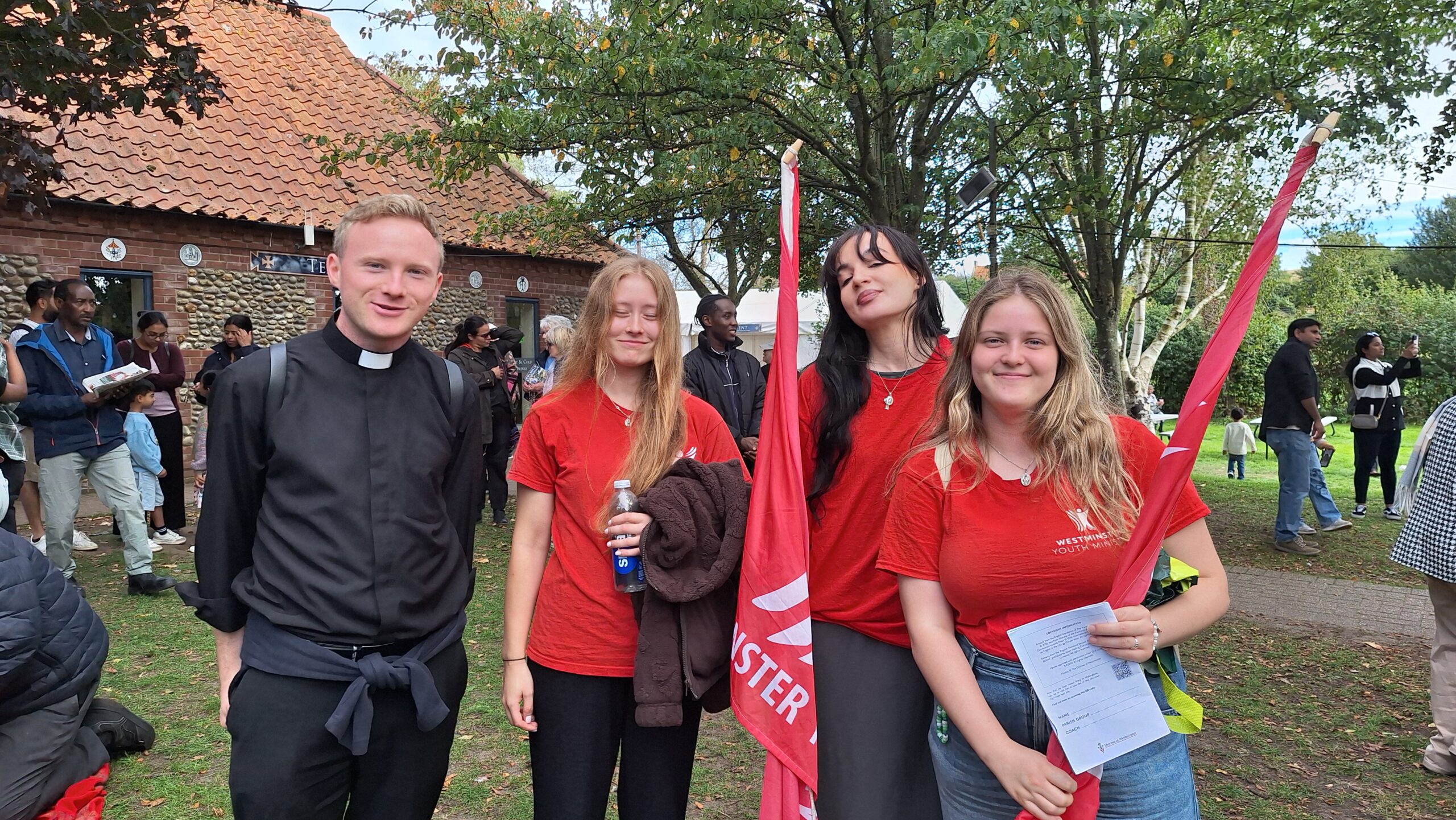
Our pilgrimage continued with Mass at noon, celebrated by Archbishop Richard Moth, with 40 priests from across our diocese. It brought together the community of around 800 pilgrims, who gathered inside and outside the Basilica to worship Our Lady and reflect on the history and significance of England’s Nazareth.
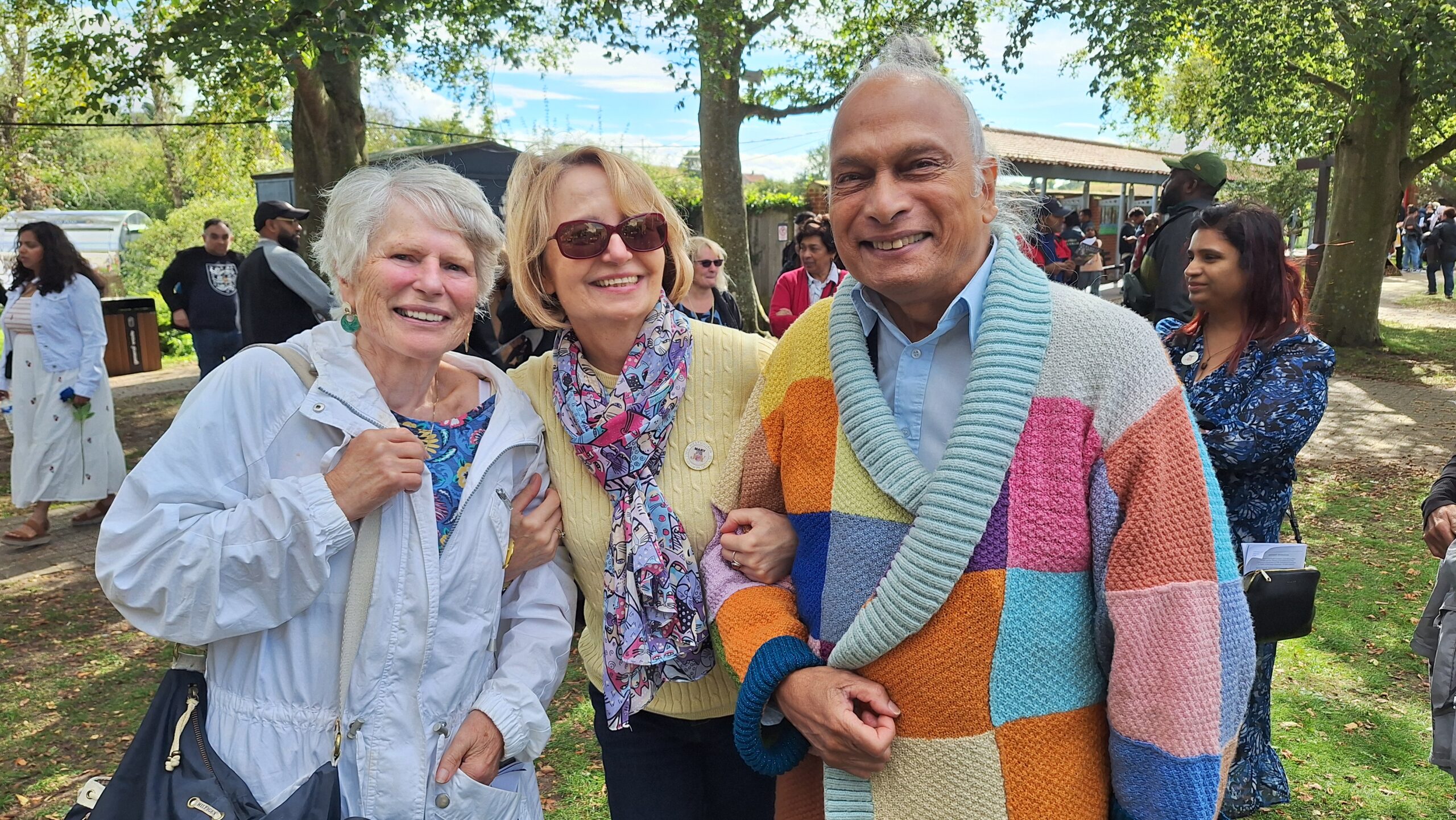
Over a picnic lunch afterwards, we had the opportunity to get to know one another better, sharing stories of our lives and our spiritual journeys. Some pilgrims came prepared to share their love and hospitality in the most practical way. Angelina, from Tottenham, fed around twenty people with her West African-style chicken, spicy rice and vegetables. When we complimented her on her generosity, she opened her arms and sang: “Freely, freely, you have received; freely, freely give.”
As pilgrims had done for centuries, we walked along the Holy Mile, some barefoot, to the Abbey grounds in Little Walsingham, where we gathered for prayers and Benediction. The final hour of our pilgrimage, spent in the shadow of the immense and breathtaking chancel wall of the original abbey, will undoubtedly remain one of our most enduring memories.
“I came to Walsingham ten years ago, but this time the pilgrimage had a very special dimension, not only because of the anniversary but also because we were there together with hundreds of other people. Although the crowds were much larger than in previous years, both the Mass and the walk along the Holy Mile had a deeply uplifting and spiritual atmosphere.” Marianne
“I was particularly moved during Holy Communion at Mass. I was reflecting on the first time I came to Walsingham, with the four other men with whom I began seminary in 2017. Not all of us became priests, so I prayed for our group and for all the ways the Lord has led us in different directions. I was also very grateful for the courage that God gave me to say ‘Yes’, a little like Our Lady in the Annunciation, to God’s plan for my life. I hope that continues in whatever the Lord has planned for me.” Father Francis